

Vol 1, Issue 9, Monday, October 5, 2026
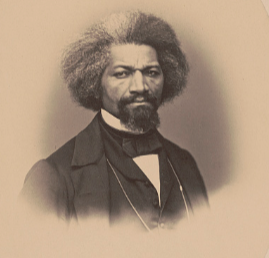
Frederick Douglass, who in 1848 stood up at Seneca Falls for the resolution that women have the right to vote. Library of Congress photo. (https://www.loc.gov/resource/ds.07422/)
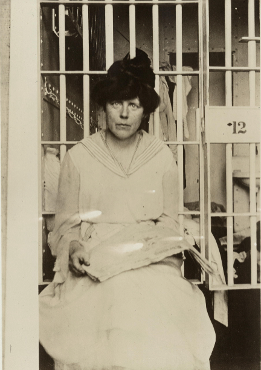
Lucy Burns, who served more time in prison than any other American suffragist, photographed in the Occoquan Workhouse, November 1917. Library of Congress photo. (https://www.loc.gov/resource/mnwp.27400_274009/)
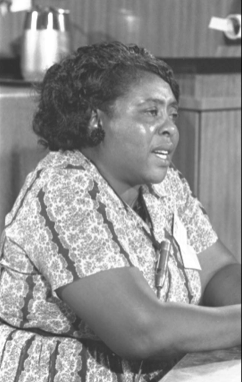
Fannie Lou Hamer, who passed the Mississippi literacy test on her second try in December 1962. Library of Congress photo. (https://www.loc.gov/resource/ppmsc.01267/)
For the Month of October
Dear Reader,
This month we focus on an editorial about how long and how hard it was for women to get the right to vote in this country, and how much longer it took for people with dark skin to have access to the ballot box. Then Executive Director Jacob Harryman runs down what to do in case of a medical emergency. We jump into club news, including the announcement of a new one: The Chess Club, meeting Tuesday, October 6, 11:30, in the Bistro. You Can Hear It brings another music column by Bellara Ears. Diane Riggs writes about the Day of the Dead. And, you’ll find the usual Schedules below.
Note: It appears we have a new Executive Director but at press time we could not obtain any information about him or her. (Jacob Harryman is the acting ED.)
Additional Note: We have set the layout for this edition of The Buzz for readers who prefer to read online two clicks larger than the default magnification (on a Mac, “Command +” two times.) Readers who read with the default size will find rather huge spaces between the different sections. If your screen is set to the default magnification, we highly recommend you increase it by two clicks.
Editorial
Seventy-Two Years, Plus Forty-Five More
Women's fight to win the vote,
and the longer fight to use it
July 19, 1848. Wesleyan Chapel, Seneca Falls, New York.
Today is supposed to be for women only, and there are far more of them sitting on hard benches than anyone expected. Most have come from nearby — this corner of New York is thick with Quakers and abolitionists. The draw is Lucretia Mott, a Quaker preacher from Philadelphia. It is brutally hot. The open windows aren’t helping.
Elizabeth Cady Stanton stands up. She is thirty-two, has three small children at home, and has never spoken to a crowd in her life. She reads out a document built on the frame of the Declaration of Independence, with two new words added to the most famous line, so that now it reads, “We hold these truths to be self-evident: that all men and women are created equal.”
The next day the men are formally welcomed, some forty in all, and everyone votes. The resolutions pass one after another without argument: that laws subordinating women carry no authority, that women be free to speak in churches, to enter the trades and professions, to be held to the same standard of virtue as men. Nobody on these benches finds any of that startling.
The ninth resolution says it is the duty of women to secure for themselves their sacred right to the vote, and the room turns skeptical. Nobody objects on principle. The objection is tactical — a demand for the ballot will sink every reasonable thing on the list and make the whole movement ridiculous. Lucretia Mott has already warned Stanton as much. Stanton’s own husband has left town rather than be in the building. Then Frederick Douglass, who publishes an antislavery paper over in Rochester, gets to his feet and says that the vote is the right by which every other right is secured. “Right,” as the masthead of his own newspaper puts it every week, “is of no sex.”
The resolution passes narrowly. One hundred people sign: sixty-eight women on the declaration itself, and thirty-two men on a separate list underneath, in favor of the movement.
One of the women is a nineteen-year-old glove maker named Charlotte Woodward, who rode to the convention in a wagon with a group of friends. Of the sixty-eight women who sign, she is the only one still alive in 1920, when the Nineteenth Amendment to the Constitution is finally ratified.
November 5, 1872, twenty-four years later. Rochester, New York.
Four days after talking their way onto the voter rolls in a neighborhood barbershop, Susan B. Anthony and fourteen other women walk into their ward’s polling place and vote for president. Two weeks later a deputy marshal turns up at her door, embarrassed, and mumbles that he’s come to arrest her. She holds out her wrists and tells him to do it properly. At trial the judge refuses to let her testify, instructs the jury to convict, and fines her a hundred dollars. She informs him she will never pay a dollar of it. She never does, and the government never makes her.
What follows is slow and grinding. In 1878 a constitutional suffrage amendment is introduced in Congress, drafted by Anthony and Stanton. It will be brought back year after year for four decades and go nowhere, and people come to call it the Anthony Amendment.
Meanwhile the fight moves to the state level: petitions, referendums, legislatures, the same arguments made and answered over and over again. But the map begins to fill in from the west, where Wyoming Territory gave women the vote back in 1869. Colorado, Utah, and Idaho follow in the 1890s.
March 3, 1913, forty-one years later. Pennsylvania Avenue, Washington.
Tomorrow Woodrow Wilson will be inaugurated. Today belongs to Alice Paul, who is twenty-eight and has just been handed the national suffrage association’s congressional committee. She has spent three years in England learning the trade from the British suffragettes. Arrested there for demonstrating, she went on hunger strike in Holloway prison and was force-fed for it. She came home impatient. She insisted this march follow the same route that the inaugural parade will take tomorrow. The city is already full, half a million people in town for the swearing-in. This afternoon, before any of them gets to see Wilson, five thousand women march up Pennsylvania Avenue from the Capitol to the Treasury.
Ida B. Wells is here. The organizers asked her to march at the rear with the other Black women, so as not to cost the cause its Southern support. She refuses, and says so. On the day, she waits on the sidewalk until the Illinois delegation comes past, and steps into its middle, where she has said all along she belongs.
A few blocks in, crowds of men on the sidewalk step off the curb and into the street, spitting, grabbing, tripping. The police mostly stand there. It takes cavalry from Fort Myer to reopen the road, and more than a hundred women end up in the hospital.
1917, four years later. The White House gates.
Twelve women are holding banners at the gates, split between the east and west entrances so Wilson has to pass them coming and going. They stand from ten in the morning until half past five, and then another shift takes over. They have been here since January, in the rain, through the war declaration. They will keep coming six days a week for two and a half years, and nearly two thousand women will take a turn on this sidewalk.
In June the arrests begin: obstructing traffic. Close to five hundred women are arrested before it’s over, and a hundred and sixty-eight serve time. Thirty-three of them are at the Occoquan Workhouse in Virginia on the night of November 14, when the guards beat them. Lucy Burns, who has served more prison time than any other American suffragist, is chained to her cell bars with her hands above her head and left that way until morning. The hunger strikers, Alice Paul among them over in the District jail, are held down and fed through tubes. The stories get out. Wilson, who has spent five years finding the subject inconvenient, comes out for the amendment the following year.
August 18, 1920, three years later. The Tennessee statehouse, Nashville.
Thirty-five states have ratified the suffrage amendment. It takes thirty-six to ratify, and the suffragists have run out of candidates — the governors of Connecticut and Vermont have refused to call their legislatures in, Delaware voted it down in June, and North Carolina put it off yesterday.
Tennessee is what’s left, in a special session its governor had to be bullied into calling. Everyone is wearing a rose. Yellow means yes, red means no, and Harry Burn’s rose is red. He is twenty-four, the youngest man in the chamber, soon up for re-election, and being pressured to vote no.
Twice the anti-suffrage side moves to table the amendment, which would kill it without anyone having to vote on it directly. Twice Burn votes with them. Both times the House splits 48–48 and the motion fails.
In Burn’s jacket is a letter that arrived this morning from his mother in McMinn County. She tells him to vote for suffrage and to be a “good boy” and help Mrs. Catt put the “rat” in ratification. (Carrie Chapman Catt runs the national suffrage association and has been camped in Nashville for a month.)
So the amendment itself goes to a roll call. The clerk reaches Burn’s name and he says aye, so fast that half the room doesn’t catch it.
Ratification carries, 49–47. Eight days later the Nineteenth Amendment is certified, and twenty-six million women are, on paper, eligible to vote.
Autumn 1920. The South.
Here’s the part the anniversary celebrations leave out.
The Nineteenth Amendment bars states from denying the vote on account of sex. It says nothing about poll taxes, literacy tests, or the men waiting outside the registrar’s office. Most of these obstacles went up a generation earlier to take the vote back from Black men, and now Black women, going to register for the first election open to them, run into the same roadblocks. They are turned away, or told to come back, or quizzed on constitutional clauses no White applicant is asked about.
The predominantly White organizers of the suffrage movement, having gotten their amendment, decline to take up the fight. When Addie Hunton, Mary Church Terrell, and some sixty other Black women press the National Woman’s Party in 1921 to address it, Alice Paul rules it a “race question,” not a women’s question. Black women keep at it on their own, through the NAACP and their clubs, for another forty years.
Native American women aren’t uniformly citizens until 1924, and some states keep them off the rolls into the 1960s. Chinese immigrant women can’t naturalize until 1943, Indian and Filipino women until 1946.
August 31, 1962, forty-two years later. The county courthouse, Indianola, Mississippi.
Fannie Lou Hamer is forty-four, a sharecropper, and has ridden twenty-six miles on a rented bus to take the literacy test. She fails. That same evening the plantation owner fires her and turns her out of her home; ten days later night riders shoot into the house where she is staying. She goes back in December and passes. The following June, on her way home from a voter-registration workshop, she is arrested in Winona and beaten in a jail cell so badly that she never fully recovers. In August 1965, President Johnson signs the Voting Rights Act, forty-five years after the Nineteenth Amendment, a hundred and seventeen after Seneca Falls.
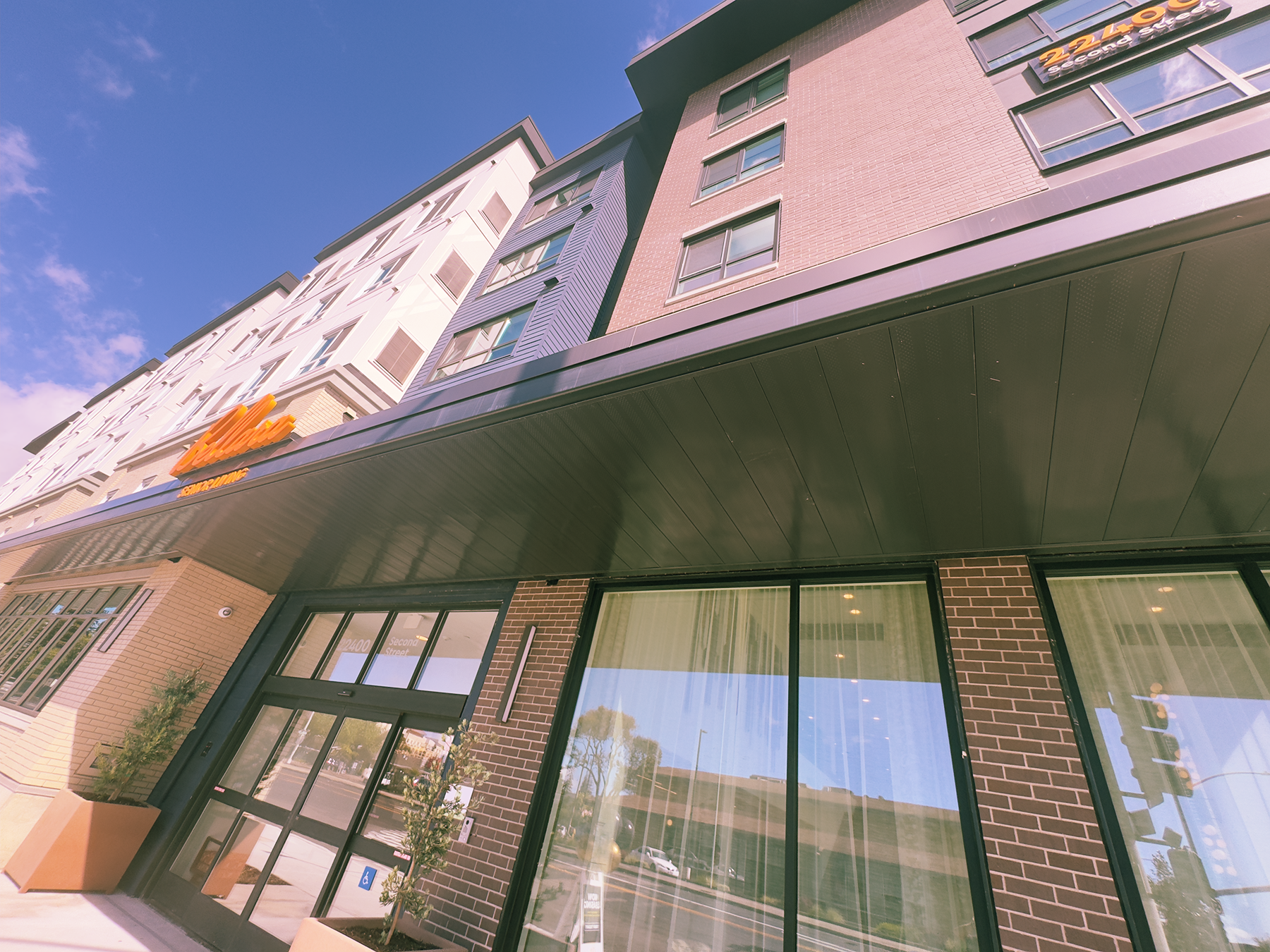
Today, October 5, 2026. Bellara Senior Living, Hayward.
Charlotte Woodward signed her name at nineteen and lived to see ratification at ninety-one, too ill by then to cast a ballot. Frederick Douglass stood up in a skeptical room and said it out loud. Harry Burn risked his seat because his mother asked him to. Fannie Lou Hamer went back to the registrar’s office a second time.
Your ballot is on its way. The midterms are next month. Election Day is Tuesday, November 3.
Practical notes for Bellara residents
If your ballot hasn’t arrived within about two weeks, call the Alameda County Registrar of Voters at (510) 267-8683 for a replacement. The last day to ask for one by mail is October 27 at 5 p.m. A registration can go inactive if you have moved recently or haven’t voted in a while, and inactive voters are not mailed a ballot; you can check your status at voterstatus.sos.ca.gov.
The last day to register is October 19. After that you can still register and vote the same day, in person, at the Registrar’s office in Oakland or at any Vote Center. Vote Centers open October 24. Ballot drop boxes open October 6.
If you are mailing your ballot back, send it by October 26. Postmark rules changed last December, and a ballot mailed close to Election Day may not be postmarked in time to count. If you must mail it in the last week, take it inside a post office and ask for a hand-stamped postmark. Better still, use a drop box: ballots dropped off by 8 p.m. on Election Day are always on time.
In Case of a Medical Emergency
by Executive Director Jacob Harryman
In the event of a medical emergency, residents should call 911 immediately. Residents may also press their emergency pendant, if they have one. The pendants are part of our nurse call system and will alert staff when the button is pressed. Residents can also use the emergency pull station located in their apartment. And, Residents can call the front desk (510-244-0949).
After-hours calls to the front desk are forwarded to the designated after-hours phone carried by staff that is monitored by the Med Techs and Care Staff. If assistance is needed, residents can call the front desk, and staff will respond as quickly as possible.
Regarding access to the building, the Fire Department has multiple ways to gain entry. There is a doorbell that can be used to alert staff, and the community also has a Knox Box on the exterior of the building that allows emergency responders access when needed.
You Can Hear It
by Bellara Ears
Our ears have taken us back to Bach, and specifically to comparing how one of his compositions sounds on two different solo instruments and three ensembles: organ, piano, string trio, two guitars, and piano with cello. We can think of it as one song heard in five variations. Bach composed Sonata No. 4 in E Minor, BWV 528, for the organ. Other musicians have since revealed how this music can sing in many more ways. Today, we focus on the slow second movement, the Andante. The music is made of three separate melodies woven together — musicians call them “voices” — and the fun is hearing how each version keeps the voices apart, or doesn’t.
Organ: Played by Leo van Doeselaar (the link starts the video at 3:15, where the Andante begins). Here we can watch the right hand, the left hand, and the feet each play one of the three voices. Watch his hands: van Doeselaar plays with his right hand on the lower keyboard and his left on the one above it. (Which hand goes to which keyboard is up to the organist.) And watch van Doeselaar’s amazing feet play the bass line on what is called the pedalboard.
There is also an animated organ version performed by Willem Tanke. We do not see the organ or organist but instead animated “notes.” The blue line at the bottom shows the notes played by the organist’s feet; orange and green are the two hand parts, which keep crossing above and below each other. Together they show the three voices of the original organ version.
Piano: Played by the brilliant Icelandic musician, Víkingur Ólafsson. The piano cannot do something the organ can: hold a single continuous note until the organist lifts the finger playing that note. But the piano can do something the organ cannot: make each note louder or softer simply by how hard the key is struck. Playing August Stradal’s transcription from the original organ version, Ólafsson takes his time, slowing down and speeding up, playing louder and softer, to give us what is to these ears a deeply emotional experience.
String Trio: The Vienna Morphing Trio — violin, viola, and cello. This version closely follows the organ with three physically separate voices. The arranger, Tomasz Wabnic, plays the viola in this recording. To our ears the players could have gone deeper into moving from the soft to loud to soft again – possibly they don’t because they are staying “true” to the original, where, on the organs Bach knew, a held note could not swell at all.
Two Guitars: Roxane Elfasci and Baptiste Erad. Unlike solo guitar versions (such as this one by Matthew McAllister), having two guitars gives the bass voice a fair presence.
And there are others, such as a Turkish-Greek duo’s version for piano and cello played by Sedef Erçetin and Maria Papapetropoulou, where the deep bass played by the cellow is very alive, but the result sounds more like two voices than three. All three are present; it is just that the two upper lines share one piano and as played here (unlike with Ólafsson) blur into a single strand.
Where to start? If you can take time for only a single recording-video, then we suggest you play Víkingur Ólafsson’s piano version. It lasts about six minutes — the length of Freddie Mercury’s “Bohemian Rhapsody.”
Write us with your thoughts!
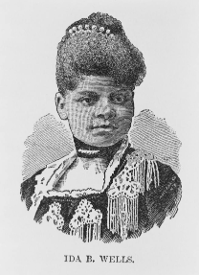
Ida B. Wells, who in 1913 refused to march at the rear with the other Black women in the Washington suffrage parade. Instead, she stepped off the sidewalk and into the middle of the Illinois delegation. Library of Congress photo. (https://www.loc.gov/resource/cph.3c07756/)
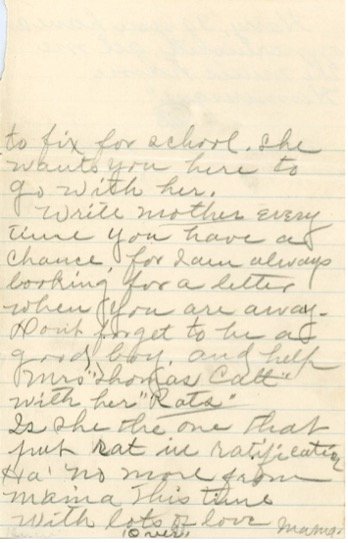
Page 5 of the letter Harry T. Burn’s mother wrote him urging him to “be a good boy.” Courtesy of the Harry T. Burn Papers, McClung Historical Collection, Knox County Public Library.
Chess Club Starting Up!
The brand-new Chess Club will hold it’s first get together to play chess on Tuesday, October 6, 11:30, in the Bistro, and then meet every Tuesday going forward. With a bit of luck our new chess sets will have arrived, but if you have one to bring along, please do so. We welcome all Residents (and any staff members with some free time) to join us. Let the games begin!
Book Club News
By Shirey Lipkin
The book club met last month to discuss “The Day the World Came to Town,” which describes how 10,000 inhabitants of Gander, Newfoundland, welcomed 7,000 airline passengers who suddenly descended on them. The United State’s airspace had been shut down after the attack on the World Trade Center in NYC on 9/11, and thirty-eight planes were diverted to that small city. The book has since become a Broadway musical, which in turn spawned a movie.
Residents present at the meeting described the book as a “fast read,” and described some of the memories of 9/11 they still hold in vivid detail. One person noted that children born after 9/11 have no idea of the impact the planes crashing into the World Trade Center and the Pentagon holds on their elders.
At the meeting were: Margaret Moreno, Lorna Rammon, Loree Austin, Lynne McKee, Susan Johnston, Shirley Lipkin, and our intrepid reporter, Rick Wise. Other book club members not present were: Dianne Henry, Daniela Lee, and Joan Jensen.
Our next book is The Traitor’s Wife, by Allison Pataki, which Amazon describes as: “A riveting work of historical fiction, The Traitor’s Wife tells the little known but explosive story of Peggy Shippen Arnold, the cunning young wife of Benedict Arnold, mastermind behind one of the most shocking acts of treason in American history.“
I’m happy to report that Bellara is again willing to purchase physical books for the club! Our next meeting will be on Monday, October 26, at 4:00 pm at the long table in the Bistro. As usual, all book lovers are welcome!
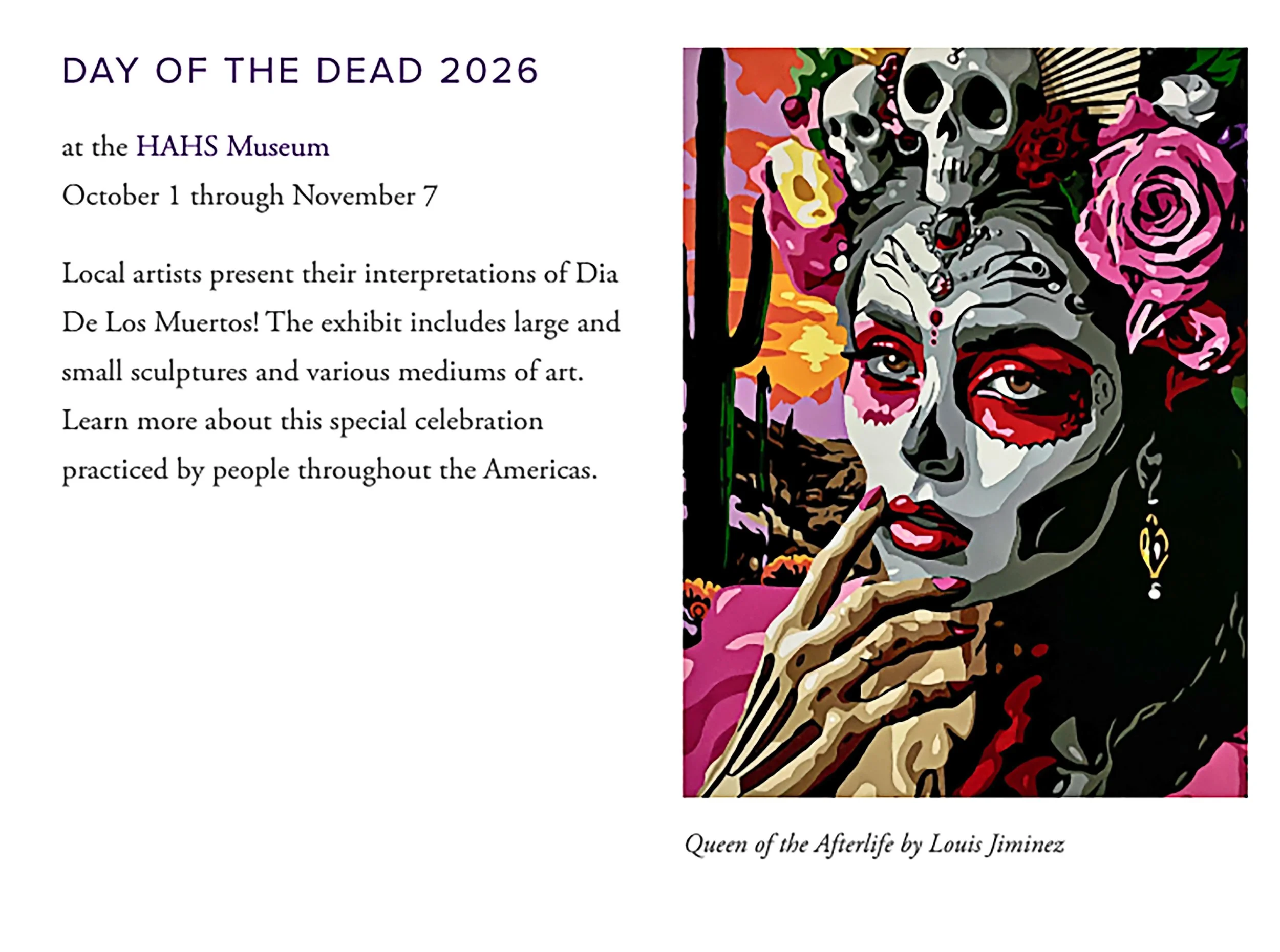
Day of the Dead
by Diane Riggs
My first contact with celebrating Day of the Dead was when a friend created an "ofrenda" for his friend who had passed away. He placed the ofrenda alongside many others in the Hayward museum for the celebration and remembrances. Having spent 26 years of my life in the Midwest, I had never learned about this custom but while watching and listening to the family members of those who had died, I realized that it was a joyous occasion!
Dia de Muertos is an ever-evolving holiday that traces its earliest roots to the Aztec in what is now central Mexico. Today, families come together to share stories and food, and to place items on the altars that include water, wind, earth, and fire. The belief is that you can cross the bridge to those who are gone and spend time with them for one night.
I now make an ofrenda in my apartment at Bellara and think of the good times with wonderful people that I have met in my life!
(Editor: Day of the Dead is celebrated on November 1 (All Saints/ Day/Children’s Spirits,) and November 2 (All Souls Day/adult spirits.))
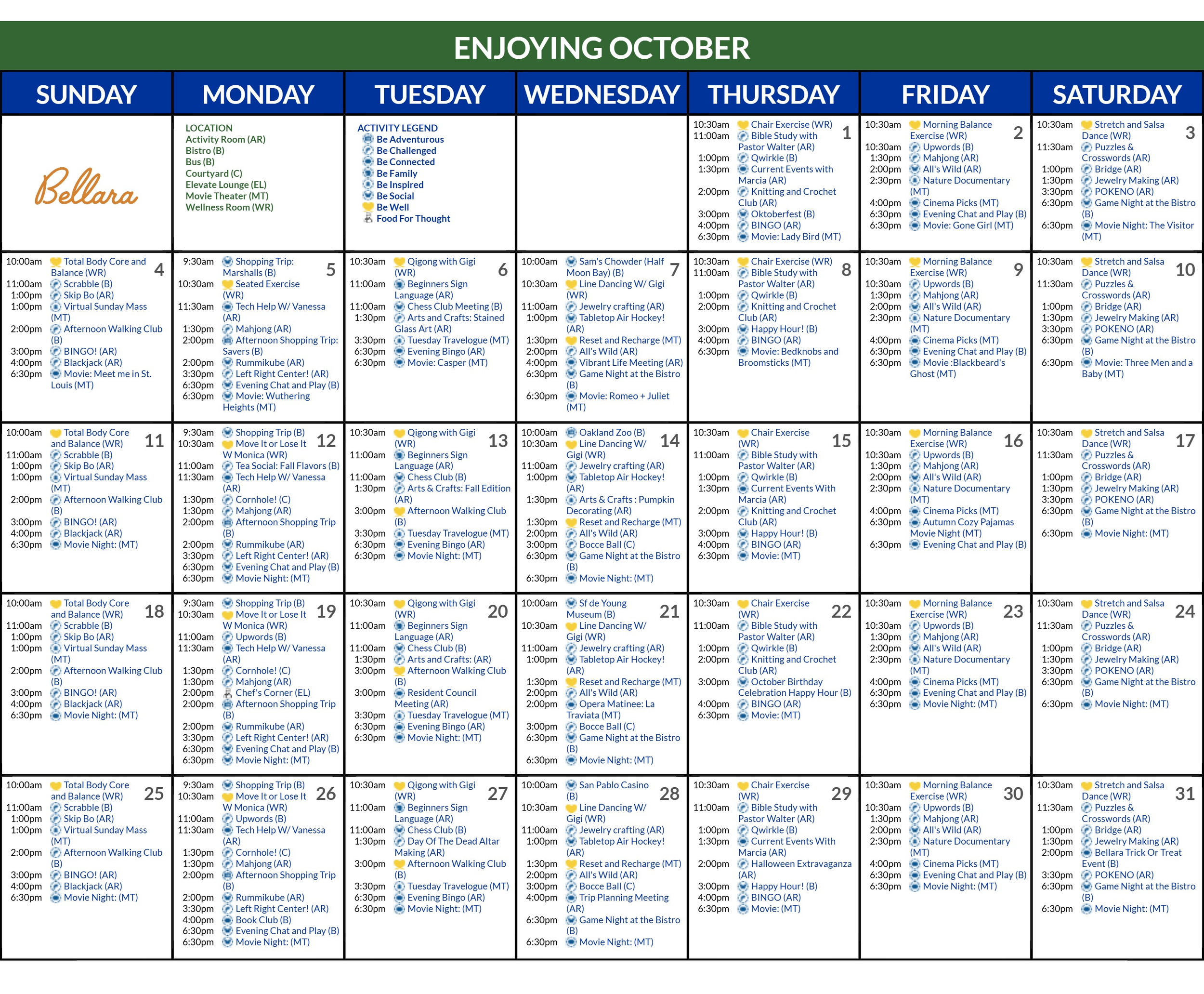
Schedules

Simon Chow, to 8/29/2026
Lawrence ("Larry") S. Molton
Trish Barnes
Dorothy Schmitt, 1930 to 4/21/2026
Patricia Larsen
Karen Koehler
Bruce Alden de Garmeaux, 12/22/1935 to 11/19/2025
Cesarina (“Rina”) Melani, February 21, 1940 to September 22, 2025
Sandy Creque, January 26, 1936 to January 10, 2026
Ken Heckart, September 16, 1942 to March 6, 2026
Doris Edelman
Jerry Hightower
In Memoriam
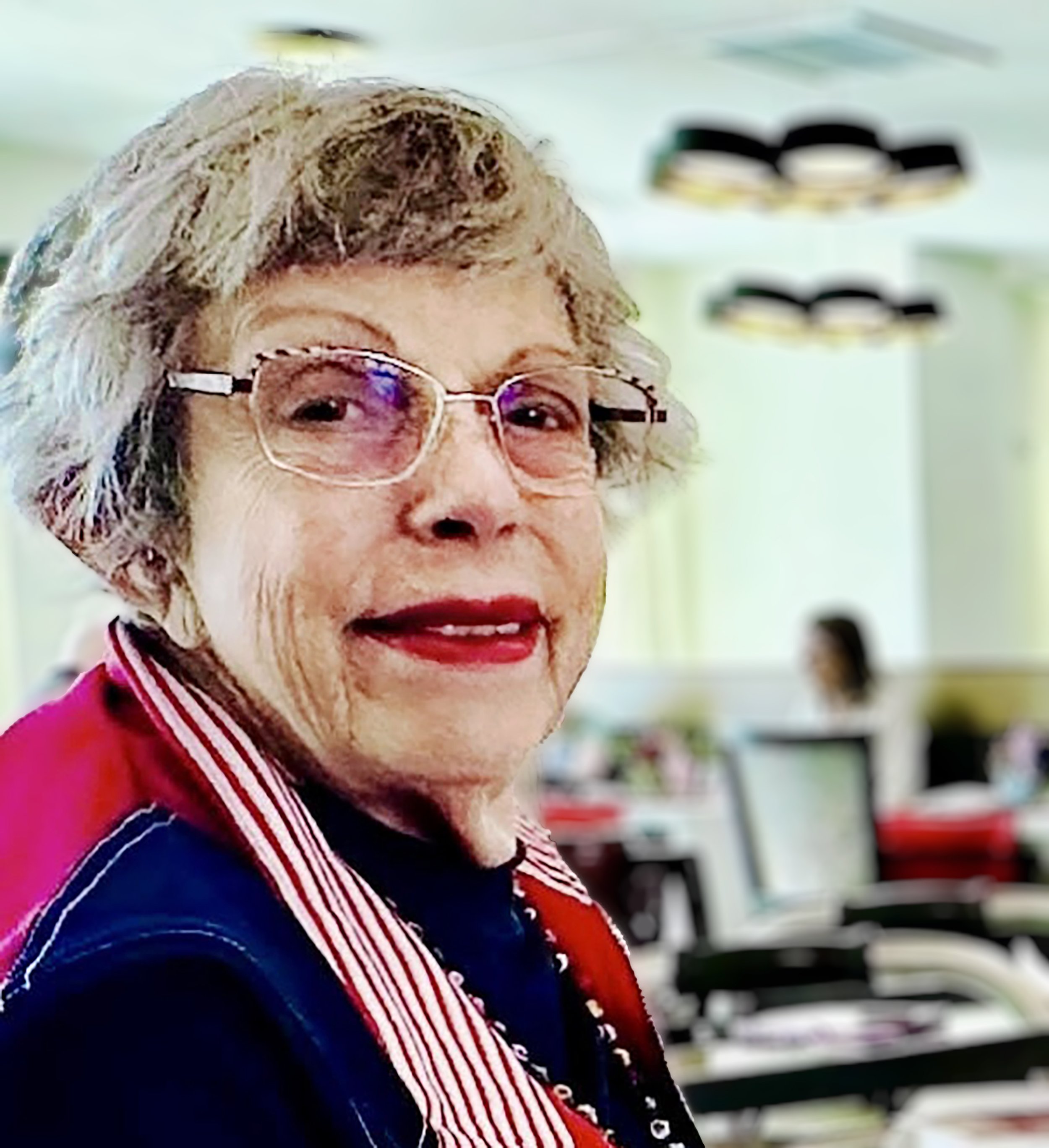
Mary Grodin. September 5, 1943 to January 24, 2026
by Karen Wandvik
Mary was one of the first Bellara residents, moving in late December 2024. I met her at the February 2025 Chinese New Year Brunch. In a red and black, Chinese-inspired blazer, she was dressed impeccably – as she always was whether on the way to a fancy restaurant or just relaxing in leisure wear. In conversations with her, I found out that she had a black belt in Karate and during her practice of martial arts had broken not only wood, but also a cement block with her bare hands!
She and her husband, Steve, had 2 sons, Howard and David, and were active members of a Corvette club for over 30 years; Mary was the treasurer of the Corvette club.
In 1986, Mary founded Grodin Financial Services in San Leandro. She also taught financial planning classes at the College of Alameda and Mills College and wrote a bi-weekly column for The San Leandro Times called “Ask Mary”, answering readers’ questions on financial topics. Her younger son, David, made his mother very happy and ensured Mary’s business legacy would live on by joining Grodin Financial Services.
Mary was quick to laugh, liked to drink Prosecco, and enjoyed baking. After the Mandelbread cooled down, she would appear in the dining room wearing an apron and rolling around the room with the bowl of cookies on her walker, using tongs to dole out a package of delicious Mandelbread to everyone who wanted some.
Let’s raise a glass of Prosecco to a smart, kind, and generous lady.
Help Wanted
[Your request for help from Residents for some project of yours]
WANTED: Someone to write profiles of staff members for the Buzz. Possibly one a month or more spaced out, depending on your time….. These profiles would be a way for Residents to get to know more about all these people who help us in so many ways. Please email: rickwise35@gmail.com.
Classifieds
[List in Classifieds your free or for-sale items. And when they are taken, please notify the Buzz so we can pull down your post.]
The Bellara Buzz is published monthly for the Residents of Bellara. Editor: Rick Wise | rickwise35@gmail.com Vol. 1, Issue 9, October 5, 2026
Contact Us
You can email the Editor, Rick Wise, at: rickwise35@gmail.com Or you can use the form at the right. Either way, send us your comments, suggestions, tips, excursion ideas, and so on. See “Submission Guidelines” — a direct link is at the top of this page.